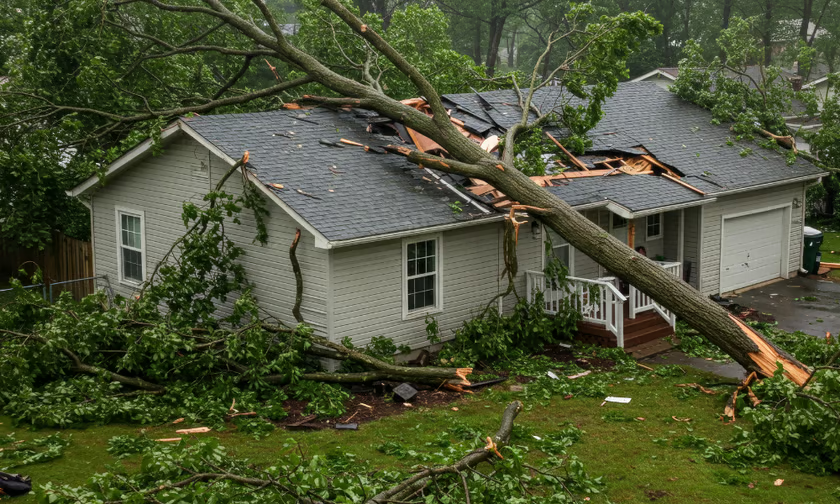
October storms spur widespread insurance claims across Southland and Otago
Invercargill City Council is facing an estimated $2.39 million repair bill from the Oct. 23 windstorm, with a substantial portion of the cost expected to fall outside its insurance cover and likely to be debt-funded over five years.
At a recent full council meeting, elected members reviewed a preliminary financial report on the event, which triggered a local state of emergency across Southland and was lifted on Nov. 7. The report confirmed the council is working with insurers and loss assessors but indicated that many of the storm-related expenses will not be reimbursed under existing policies.
Council weighs funding gap after October wind event
Invercargill City Council chief executive Michael Day said the organisation has moved from crisis response to recovery for both Invercargill and Bluff. “The Southland region is now in recovery mode following October’s weather event. We’re extremely grateful nobody in our community was injured during the winds, and our recovery efforts are able to focus on ensuring council’s facilities, services, and properties can be repaired,” Day said.
Read next: New Zealand insurers processing October weather event claims
Day added that the event was beyond the council’s control but has left it with unavoidable repair obligations. “The amount of damage inflicted on some of our facilities and infrastructure was significant and, unfortunately, completely outside of our control. We know how important these spaces are for our community, and it’s critical that we undertake substantial repair efforts to get Invercargill and Bluff back to normal. The costs associated with undertaking this work are unavoidable, as we need to ensure our community’s safety is prioritised,” he said.
Parks, housing, and community facilities bear the brunt
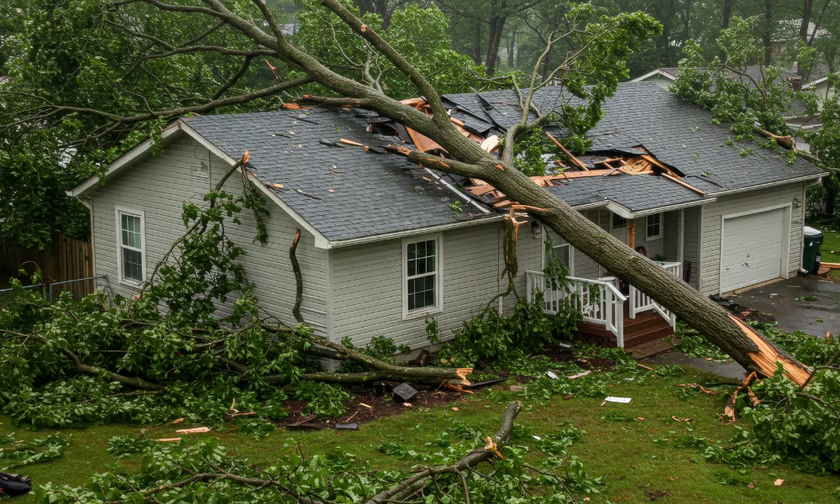
The early cost breakdown shows the extent of damage to local authority assets from the windstorm. Parks and reserves account for the largest single cost category, with an estimated $930,538 tied to fallen trees and fencing damage across about 150 sites. Queens Park is being reopened in stages to manage public access while extensive remedial work continues. The figure excludes any future tree replanting.
Read next: Claims advice released after severe New Zealand storms
Council-owned elderly housing has recorded about $623,304 in damage, including impacts to units, fences, and trees. Investment properties have generated a further $28,000 in tree removal and roof work. Other council properties – including facilities such as Splash Palace and the Bluff Service Centre – have incurred an estimated $294,687 in window, roof, and related damage, together with structural assessments. Across the roading network, repairs to street lighting and traffic signals are expected to cost about $298,308.
Utility and operational services have also been affected. Sewerage-related costs, including vacuum trucks and repairs at water treatment plants, are estimated at $78,623, while stormwater ditch repairs are projected at $50,000. Fence damage at the Branxholme water treatment plant is costed at $8,650. Storm-related work in solid waste management, including traffic management and shedding, totals about $81,694.
Vehicle damage within the council fleet is minor at around $500 for paintwork repairs, and information services recorded $215 for aerial replacement at a cemetery. Council staff contributed 525 hours to Emergency Management Southland between Oct. 23, when the winds hit, and Nov. 7, when the state of emergency ended.
Day said the council is likely to debt-fund the uninsured portion of the loss through a five-year loan. “These facilities are a real lifeline for many people in our community, so we are working as hard and as fast as we can to carry out the repairs they need,” he said.
Insurers report high volume of wind-related claims
The Invercargill losses are part of wider claims from the October storms. By late November, New Zealand insurers had processed about 10,000 claims from the severe weather, with Southland and Otago accounting for roughly 70% of lodged claims.
Rural insurer FMG has reported more than 3,000 claims from the Oct. 23 event, with estimated exposure of more than $28 million. Of these, about 1,500 claims are from Southland, 700 from Otago, and more than 650 from Canterbury, including approximately 80 Canterbury claims involving irrigation infrastructure.
Tower has received 850 claims from the Oct. 23 storm, including 260 from Southland and 150 from Otago. Lisa Maxwell, Tower’s head of natural disaster response, said: “The majority of claims are for minor damage, for example, fences, roofing, and damage from debris.”
IAG, through its AMI, State, and NZI brands, has logged more than 4,300 claims from the same event, with more than 3,000 originating from Southland and Otago. An IAG spokesperson said wind-related losses included “smashed windows and doors, flying roofs and sheds, and also spoiled food as a result of the power outages.”